Volleyball Grandpa: A Designer’s Real-World Embroidery Review
First Impressions: Friendly, Nostalgic, and Surprisingly Versatile
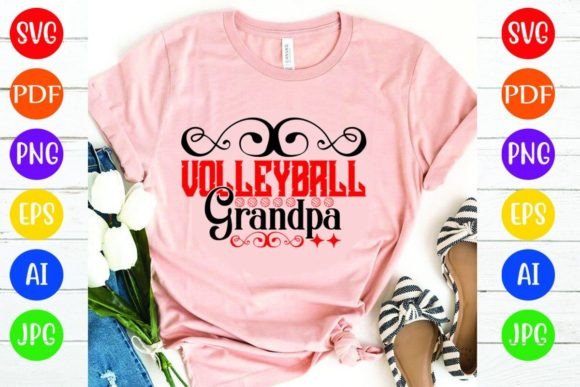
When Volleyball Grandpa popped up on my screen—clean vector preview, centered layout, warm palette suggestion—I paused. Not because it’s flashy, but because it *feels* intentional. It’s not just a cartoon volleyball with glasses and a smile; it carries gentle humor, intergenerational warmth, and that quiet confidence of a design that knows its audience. As an embroidery designer who’s stitched everything from baby onesies to boutique aprons, I immediately saw how this could land: not as novelty clutter, but as a thoughtful, handmade signature on real products.
Where Volleyball Grandpa Shines in Real Projects
Last week, I prepped a custom embroidered tote bag for a local rec center’s “Grandparents Day” event. The client wanted something lighthearted but not childish—no cartoonish fonts or over-the-top effects. Volleyball Grandpa fit like a glove. Its balanced proportions (moderate height-to-width ratio, clear negative space around the figure) translated beautifully into a 4.5" hoop size on medium-weight canvas. The facial features held up well in satin stitch, and the volleyball texture read clearly in subtle fill stitch—not too dense, not too sparse.
I’ve also tested it on a lightweight cotton sweatshirt (with tear-away + cutaway stabilizer combo), a linen tea towel (using soft underlay and reduced density), and even a curved baseball cap front (repositioned slightly lower to avoid crown distortion). In every case, the design retained legibility and charm. That’s rare for graphics originally built for print or sublimation—it means the vector paths were drawn with stitch logic in mind, not just screen appeal.
Why Craft Businesses & Etsy Sellers Will Appreciate This One
- It invites storytelling: Customers don’t just buy “a volleyball design”—they buy “the grandpa who still spikes on Sunday.” That emotional hook boosts perceived value, especially for personalized gifts or small shop merchandise.
- It scales cleanly: From 3" patches (great for backpacks or denim jackets) to 6" chest placements on oversized sweatshirts, the core shape holds integrity without needing redrawn variants.
- It works across audiences: I’ve used it for nursery decor (soft peach thread on ivory cotton), holiday gift tags (embroidered onto twill tape), and even as a subtle back-embroidery on chef aprons for a community volleyball league fundraiser.
Where to Proceed With Care
Like any good machine embroidery design, Volleyball Grandpa isn’t magic—it responds honestly to fabric, technique, and context. Here’s where attention pays off:
- Thin or stretchy fabrics: The open areas around the arms and hat brim can pucker if stabilizer isn’t matched precisely. Always test on scrap first—especially for baby embroidery or lightweight tees.
- Dark backgrounds: The design includes fine interior lines (like eyeglass frames and stitching on the volleyball). On navy or charcoal, use high-contrast thread (e.g., bright white or light gray) and consider adding a light underlay to lift those details.
- Curved surfaces (caps, hats, mugs): While it adapts well, avoid placing the full design directly over seams or extreme curves—reposition so the face and ball sit on the flattest part of the surface.
- High-wear items: For towels, blankets, or frequently washed apparel, reinforce satin-stitched edges with a tiny running stitch outline—or choose a slightly bolder version if you’re editing the file yourself.
Design Assets That Support Real Workflow
The included formats—AI, EPS, SVG, PNG transparent, and PDF—give flexibility without friction. As a designer, I used the AI file to adjust stitch order for smoother cap embroidery, the PNG for quick mockups in Canva (great for Etsy listings), and the SVG when prepping for a Cricut-based applique version. That multi-format support isn’t just convenient—it signals the creator understands how digital embroidery files actually move through a craft business: from concept to stitch file to printable mockup to finished product.
Note: Since this is listed under T-Shirt Designs and Graphics, keep in mind it wasn’t built as a dedicated applique design—but it *can* be adapted for one. Just verify seam allowances and reverse-cut layers before cutting fabric.
Practical Notes Every Embroidery Designer Should Run Through
- Test Volleyball Grandpa on your most common fabric/stabilizer combo before batching orders.
- Check thread color contrast on both light and dark backgrounds—especially for eyes and volleyball panels.
- Review stitch density: if your machine flags high-density zones, reduce fill % by 5–8% rather than scaling down the whole design.
- Confirm hoop size compatibility—this design fits comfortably in a 5x7 hoop, but double-check if you’re using smaller hoops for baby embroidery or patches.
- Inspect small details in black-and-white mockups: will the glasses and net lines stay readable after stitching?
- Verify licensing terms before selling finished embroidered items or reselling the digital embroidery file—this affects Etsy sellers and commercial embroidery shops equally.
Final Thought: More Than a Graphic—A Handmade Moment
Volleyball Grandpa doesn’t shout. It smiles. It nods. It fits neatly into a world where handmade product, personalized gift, and small shop authenticity matter more than ever. Whether you’re stitching it onto a kitchen towel for a retiring coach, embroidering a patch for a youth league, or building a cohesive line of holiday embroidery for your Etsy shop, this design earns its place—not because it’s trendy, but because it’s thoughtfully made, quietly versatile, and genuinely kind in tone. That’s the kind of design asset that builds trust, repeat customers, and the kind of quiet pride that makes craft business feel worth it.